Visar inlägg med etikett resonance. Visa alla inlägg

lördag 26 juli 2025

Deterministic Measurement of a Quantum Systems

This a preparation of the next post on RealNucleus vs Standard Model/QCD.

Standard Quantum Mechanics StdQM says that measurement of the state of a quantum mechanical system like an atom/molecule or nucleus necessarily interferes with the outcome of the measurement. This is called "collapse of the wave function into a definite eigenstate" which happens with a certain probability during the measurement process, from an indefinite state in superposition of eigenstates described by the wave function prior to measurement. This is viewed as maybe the deepest mystery of StdQM still today 100 years after its formation. It is contrasted with measurement of a system of classical mechanics which can be done with insignificant interference with the measuring device. 

Yet measuring the spectrum, as the set of eigenfrequencies of an atom, always gives the same result with precision set only by the measuring device. No probability, no collapse of the wave function, no indeterminism, essentially no quantum. The same as recording the set of frequencies generated by plucking a guitar string using an app on your mobile. Same string, same frequencies. 

How is this possible? It is made possible by a phenomenon of resonance which is analysed in a context of blackbody radiation as Computational BlackBody Radiation. The measurement of the spectrum of a system like an atom or guitar string, is made by subjecting the system to periodic forcing of varying frequency as input and observing a peak in the response of the system to signal that an eigenfrequency of the system is close to the forcing frequency. In this procedure there is massive interference with the system through the forcing, while the reaction of the system revealing its eigenfrequencies can be viewed to be independent of the procedure and so expected to always give the same result. We thus find no principal difference as concerns spectrum of an atom and a classical system like a guitar string.  

But there is a difference between a classical mechanics guitar string and an an atom in the sense that the tone generated by a guitar string as a superposition of eigenfunctions as the wave form (which depends not only on the string but also on the plucking technique) can be listened to/measured, while the wave function/form of the atom as superposition of eigenfunctions cannot be observed, only the spectrum of the atom as the set of eigenfrequencies.  

How important is then interaction by resonance as determinism also in a quantum system? There are good reasons made as Computational BlackBody Radiation to view all interaction as somehow monitored by resonance. Listening to the tone/wave form generated by a plucked guitar string thus involves recording individual resonances (and amplitudes) by the ear which are then synthesized in the brain back to a wave form. It seems reasonable to expect that interaction between quantum system also primarily is monitored by resonances and then in a deterministic way and then not directly by wave form interaction.

Reducing measurement of a quantum system like an atom to resonance, makes it deterministic and circumvents the roulette game of "collapse of the wave function". Moreover, if interaction between quantum systems relies on resonance, then it can also be deterministic.


tisdag 22 oktober 2024

Morphogenesis by Resonance

                                                       Patterns formed by resonance?

The book Morphic Resonance by Rupert Sheldrake addresses the fundamental problem of how organised structures are formed in physics, chemistry, biology from elementary building blocks seemingly without information about the overall structure. How does a flower, bird or human being develop from a genetic code, which contains recipes for protein building blocks but no information about the whole structure? Sheldrake seeks an answer in the form of morphogenetic fields carrying this information as collective resonance phenomena. 

We are familiar with resonance in physics as the wave harmonics of a vibrating string. We understand that wave patterns develop from instabilities with tendency to increase crests and troughs of certain wave lengths. Watch dropping a stone in a pond.

Thus we expect to see form develop from resonance serving as morphogenesis and find this in particular in the case of fluid flow with turbulent vortices developing from convective instabilities as shown in Computational Turbulent Incompressible Flow. 

The non-radiating stable ground state of an atom is represented by the lowest harmonic of a Schrödinger wave equation, while higher harmonics are triggered for a radiating atom. Real Quantum Mechanics gives a new explanation of the lack of radiation from the ground state, as the mystery Bohr struggled with. 

Computational Black Body Radiation presents a new analysis of the transfer of energy from a source of light to a receiver as an atomic resonance phenomenon carried by standing electromagnetic waves without need to introduce photons as particles of light. A similar transfer is seen between two tuning forks carried by standing acoustic waves. 

Sheldrake's concept of morphic resonance thus comes to expression in physics and may serve also in chemistry and biology in more general forms. Maybe memory is carried by resonance... Maybe the fertilised egg carries the blueprint as a resonance bringing the genetic code to life.

Musical harmony is based on tonal resonance, while musical rhythm represent patterns over time. Singing in a choir unites single souls into one. 

Resonance can have the material form of vibrating strings, or immaterial as a common gravitational potential (recall Neo-Newtonian Cosmology) or more generally beliefs forming a society. An immense subject…

Resonance appears as an expression of instability of a system in the sense that a small periodic forcing causes large oscillations in the system. This happens if the periodicity of the forcing agrees with an eigenvalue of the system and the corresponding eigenfunction represents the shape of the system response.  This allows patterns to develop from small forcing in creation of form as morphogenesis "by itself".


lördag 24 augusti 2024

Harmony vs Disharmony between Newton and Maxwell

Special Relativity: Disharmony Newton-Maxwell
Many-Minds Relativity: Harmony Newton-Maxwell  

Modern physics was formed in the late 19th century in an effort to harmonize classical Newtonian mechanics with the new electromagnetics described by Maxwell's equations, in particular there was a need to connect material as matter of positive mass with immaterial light of zero mass. Many established physicists/mathematicians took on the challenge including Lorentz and Poincare, but its was the young Einstein as patent clerk in Bern in 1905 who took the lead with his Special Theory of Relativity SR based on the Lorentz transformation.

Today SR is viewed to be a fundamental part of modern physics, but the trouble is that SR rather than harmonising Newtonian mechanics with electromagnetics, discriminates Newtonian mechanics and in its place puts in relativistic mechanics (with new strange effects as space contraction and time dilation). The resulting disharmony Newton-Maxwell has fed the crisis of modern physics. 

It is thus a great loss to sack Newton's mechanics, and it is natural to ask if this is really necessary and maybe after all it is possible to find a route to harmony Newton-Maxwell. This is the goal of Many-Minds Relativity MMR. 

As a basic instance of harmony according to MMR let us consider propagation of light from a light source S to a receiver R viewed as propagation of light in Euclidean $x$-coordinates with the receiver R fixed at the origin $x=0$. We follow the 2019 SI Standard and determine the spatial scale in the $x$-system by travel time of light according to Maxwell's equations expressed in $x$-coordinates assuming a preset speed of light of exactly 299792458 meter/second with time set by a standard caesium atomic clock. 

We may think of the source S as an oscillating material charge generating a standing immaterial electromagnetic wave which interacts with a material charge as the receiver R. This means that material at S connects to material at R through electromagnetic waves as a resonance phenomenon. 

Extension to a moving source is direct, which introduces a Doppler effect. 

We note that the speed of light is preset to a certain SI Standard value, which means that the speed of light for any connection between source and receiver is the same, by SI Standard definition. We understand that the wave physics for any connection source-receiver is the same in the sense that the same Maxwell's equations in a coordinate system fixed to the receiver is used, which gives a rationale for the standard. All source-receiver systems are alike in the sense that the spatial scale on a Euclidean coordinate system fixed to the source is determined by the same Maxwell's equations with a preset speed of light. 

We have now covered the case of many sources an one receiver at $x=0$ with Maxwell's equations expressed in a Euclidean $x$-coordinates with spatial scale determined by travel time of light with preset speed which is in full harmony with Newton's mechanics in $x$-coordinates.

We also have to consider the case of several receiver's moving with constant velocity with respect to each other and ask to what extent observations using different receivers can be made to agree, which means that full agreement is not possible and nor needed. This the subject of MMR.

Notice that the a connection between the material and immaterial world is established by the 2019 SI Standard where the geometry of the material world is determined by travel time of immaterial light. This was not the situation confronting Einstein in 1905 forcing geometry measured by material meter sticks to be subject to strange effects of space contraction according to SR.  

The 2019 SI Standard effectively pulls the carpet under SR, by imposing the same speed of light on all observers thus leaving the Lorentz transformation without any role. But this is shocking to a physicist of today trained to view the Lorentz transformation as the incarnation of modern physics as a core belief not to be given up easily. 

Summary: 

  • In SR Newton does not fit with Maxwell and so Newton is modified to relativistic mechanics.
  • In MMR Newton fits with Maxwell more or less and does not need modification.
  • SR: disharmony Newton-Maxwell.
  • MMR: harmony Newton-Maxwell.

And what about you, harmony or disharmony?

lördag 31 december 2022

Schrödinger vs Real Quantum Mechanics


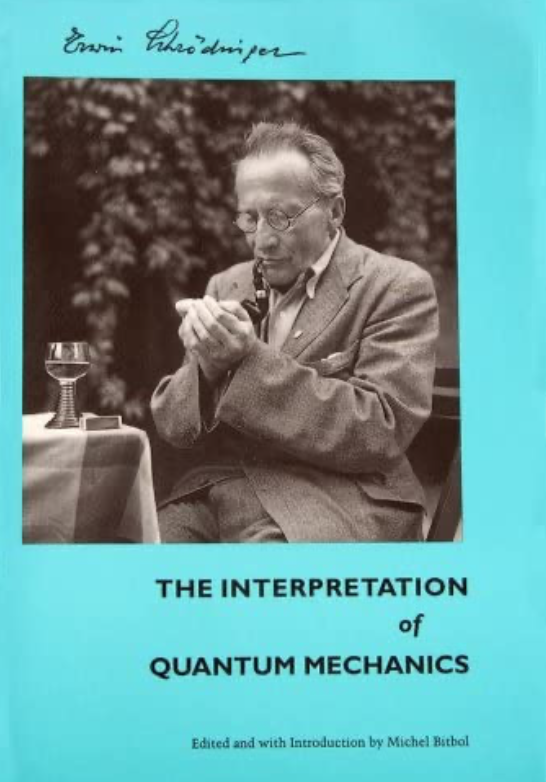
Erwin Schrödinger created quantum wave mechanics in 1925 and summarises his view on the subsequent development into the Copenhagen Interpretation CI in Chapter 1 of Thee Interpretation of Quantum Mechanics (Dublin Seminars 1949-1955):

  • Let me say at the outset, that in this discourse, I am opposing not a few special statements of quantum mechanics held today, I am opposing as it were the whole of it, I am opposing its basic views that have been shaped 25 years ago, when Max Born put forward his probability interpretation, which was accepted by almost everybody.
  • The view I am opposing is so widely accepted, without ever being questioned, that I would have some difficulties in making you believe that I really, really consider it inadequate and wish to abandon it. 
Schrödinger goes on to outline his basic idea that atom physics can be seen as a form wave mechanics similar to that of classical mathematical physics/continuum mechanics. This is the view adopted in my books Real Quantum Mechanics RealQM and Mathematical Physics of BlackBody Radiation BBR.

In particular, Schrödinger points to the basic role of wave resonance, which is a central theme in both RealQM and BBR (see earlier posts).   

Schrödinger strongly opposes to view atom physics as particle physics, also expressed in RealQM:
  • Hence the idea of point-electrons, whatever it may mean elsewhere, becomes absolutely inadequate ....within the body of an atom. 
  • To my mind it is patently absurd to call anything the probability of finding an electron near a particular point ... with respect to the nucleus.  
  • Nobody has ever tried to look for one, nobody ever will; in fact nobody has ever experienced or will ever experiment in this fashion on a single atom of hydrogen or whatnot. 
  • What astonishes me most is, that this kind of consideration is adopted as the basis of their theory (CI).
In particular, there is in Schrödinger's quantum mechanics no place for Bohmian Mechanics, since it gives particles an essential role. 

Altogether, RealQM can be seen as a concrete realisation of the ideas put forward by Schrödinger from his kick start in 1925 to maturity in later years. 

In RealQM there is no Measurement Problem from "collapse of the wave function" as a main mystery of CI. The spectrum of an atom is measured in resonance with a measuring device. In RealQM there is no reason to seek to measure the position of an electron as particle in an atom. 

New Year's Question:
  • Did Schrödinger contemplate RealQM and dismissed it, or did he simply miss it? 
Maybe something for you to rethink?

PS Schrödinger on atomism, particles, quantum jumps/discontinuities and resonance:
  • Hence there can be no shadow of a doubt, that the elementary particles themselves are Planckian ''energy parcels". This is fine. 
  • But if we now dismiss the idea as too naive, the idea that energy is always exchanged in whole parcels (quanta), if we replace it by resonance view, does this not mean that atomism will go by the board? 
  • Well no, not atomism, only the corpuscles, the atoms and the molecules, but not atomism. I believe the discrete scheme of proper frequencies/resonances... to be powerful enough to embrace all the actually observed discontinuities in nature for which atomism stood, without our having to enhance them by fictitious discontinuities that are not observed.
On philosophy of quantum mechanics:
  • Philosophical considerations about quantum mechanics have gone out of fashion. There is a widespread belief that they have become gratuitous, that everything is all right in this respect for we have been given the marvellously soothing word of complementarity, that it is only the detailed mathematical or physical theory which is still at fault.
  • I cannot share this view. In the 20 years of its existence, serious objections have again and again been raised against the current interpretation. Some of them have not been solved but shelved.
  • No lesser person than Einstein still withholds his assent. In a letter to Max Born, he formulated his opinion in one marvellously poised sentence: 
  • "Of this I am firmly convinced that we shall eventually land at a theory in which the things that are linked by laws are not probabilities but imaged facts, as was taken for granted until lately.''

fredag 5 augusti 2022

Is Radiative Heat Transfer a Resonance Phenomenon Between Bodies?

Computational BlackBody Radiation offers a new proof of the Planck-Stefan-Boltzmann Law PSB based on electromagnetic wave resonance under deterministic finite precision computation, taking the form

  • $Q = \sigma (T_A^4 - T_B^4),$       (1)
where $Q$ is (normalised) radiative transfer of heat energy between two blackbodies A and B with temperatures $T_A$ and $T_B$ Kelvin, and $\sigma$ is the SB constant. If $T_A>T_B$ then the heat transfer is from A to B.

This is to be compared with the 1900 proof by Planck based on particle/quanta statistics typically expressed on the following form involving only one blackbody of temperature $T$:
  • $Q = \sigma T^4.$       (2)
Comparing (1) and (2) we see that (1) expresses the radiative heat transfer between two bodies in resonance, while (2) is supposed to express the radiative heat transfer from one body independent of surrounding bodies and thus without resonance. 

In particular, (1) expresses that heat transfer from A requires the presence of a receptor B with lower temperature. On the other hand (2) appears to express that a body can radiate (spit out quanta/photons) without receptor, or assuming the presence of "empty space" at 0 Kelvin acting as receptor. In this case the body at higher temperature will spit most and so win the combat. 

This leads to the following questions: 
  • Does radiative heat transfer from one body need a receptor at lower temperature?
  • Does radiative heat transfer involve a resonance phenomenon between bodies? 
The new proof of PSB suggests that the answer is YES, while the standard proof suggests NO. What does physics and observation say? YES or No? Is radiative heat transfer carried by electromagnetic waves or particles/photons? An answer that it is both is no good. The questions concern basic physics and must be answered.

Compare with resonance between two tuning forks:


 To be compared with a particle model with both forks spitting out particles/phonons?

PS Read about Planck's struggle to prove (2) in Quantum Mechanics at the Crossroads starting with Schrödinger Against Particles and Quantum Jumps by M. Bitbol and continuing with Max Planck's Compromises on the Way to and from the Absolute by J. L. Heilbron.

Yes, it is not a good idea to resort to compromises in science, which is the essence of politics. Planck was not happy with his particle/quanta statistics and neither was Schrödinger, yet it has come to serve as a fundamental part of quantum mechanics following Born-Bohr. Real Quantum Mechanics in the spirit of Schrödinger presents a new realist deterministic approach based on waves instead of particle statistics.  


söndag 10 januari 2016

What Makes People March in Step?


The Secret of the Piano exhibits a basic resonance phenomenon where the vibrations of a collection of strings are kept in phase by all having a phase shift of half a period vs a soundboard in a "breathing" interaction between strings and soundboard with the strings moving "in" when the soundboard goes "out" and vice versa. The collection of strings and the soundboard thus take "opposite positions".

This phenomenon may also be seen in the interaction between human beings in a society, where a collection of people "march in step" e.g by sharing certain political views, and one may ask how this coordination comes about:
  1.  Is it the idea of a leader that is adopted and followed?
  2.  Is it a common "enemy" as the opposite of a leader, which unites people? 
The lesson from the piano suggests 2, the reason being that in this case there is massive energy exchange between strings and soundboard back-and-forth allowing coordination to occur. On the other hand, when strings and soundboard vibrate in phase and then without energy exchange, there is no correction mechanism and strings and soundboard will quickly go out-of-phase. 

Similarly, one may expect that "negative leadership" may be more effective than "positive leadership", because taking opposite views involves massive exchange of energy thus allowing correction to occur, while agreeing can be effortless without corrective measure. 

This observation may connect to my experience of many times ending up with the opposite view of a group of people all marching in step and with a lot of energy mobilized on both parts.      

onsdag 12 mars 2014

Blackbody Radiation as Collective Vibration Synchronized by Resonance


There are two descriptions of the basic phenomenon of a radiation from a heated body (blackbody or greybody radiation) starting from a description of light as a stream of light particles named photons or as electromagnetic waves.

That the particle description of light is both primitive and unphysical was well understood before Einstein in 1905 suggested an explanation of the photoelectric effect based on light as a stream of particles later named photons, stimulated by Planck's derivation of Planck's law in 1900 based on radiation emitted in discrete quanta. However, with the development of quantum mechanics as a description of atomistic physics in the 1920s, the primitive and unphysical idea of light as a stream of particles was turned into a trademark of modern physics of highest insight.

The standpoint today is that light is both particle and wave, and the physicist is free to choose the description which best serves a given problem. In particular, the particle description is supposed to serve well to explain the physics of both blackbody radiation and photoelectricity. But since the particle description is primitive and unphysical, there must be something fishy about the idea that emission of radiation from a heated body results from emission of individual photons from individual atoms together forming a stream of photons leaving the body. We will return to the primitivism of this view after a study of the more educated idea of light as an (electromagnetic) wave phenomenon.

This more educated view is presented on Computational Blackbody Radiation with the following basic message:
  1. Radiation is a collective phenomenon generated from in-phase oscillations of atoms in a structured web of atoms synchronized by resonance.
  2. A radiating web of atoms acts like a system of tuning forks which tend to vibrate in phase as a result of resonance by acoustic waves. A radiating web of atoms acts like a swarm of cikadas singing in phase. 
  3. A radiating body has a high-frequency cut-off scaling with temperature of the form $\nu > \frac{T}{\hat h}$ with $\hat h = 4.8 \times 10^{-11}\, Ks$,where $\nu$ is frequency and $T$ temperature in degree Kelvin $K$, which translates to a wave-length $\lambda < \hat h\frac{c}{T}\, m$ as smallest correlation length for synchronization, where $c\, m/s$ is the speed of light. For $T =1500 K$ we get $\lambda \approx 10^{-5}\ m$ which is about 20 times the wave length of visible light.   
We can now understand that the particle view is primitive because it is unable to explain that the outgoing radiation consists of electromagnetic waves which are in-phase. If single atoms are emitting single photons there is no mechanism ensuring that corresponding particles/waves are in-phase, and so a most essential element is missing.

The analysis of Computational Blackbody Radiation shows that an ideal blackbody is characterized as a body which is (i) not reflecting and (ii) has a maximal high frequency cut-off. It is observed that the emission from a hole in a cavity with graphite walls is a realization of a blackbody. This fact can be understood as an effect of the regular surface structure of graphite supporting collective atom oscillations synchronized by resonance on an atomic surface web of smallest mesh size $\sim 10^{-9}$.


tisdag 26 februari 2013

IR-Photons as Optical Phonons as Waves


In climate science it is common to view radiative heat transfer as a two-way flow of IR-photons particles carrying lumps of energy back and forth between e.g. the Earth surface and the atmosphere.

This view lacks physics rationale because it includes heat transfer by IR-photons not only from warm to cold, but also form cold to warm in violation of the 2nd Law of Thermodynamics. The usual way to handle this contradiction is to say that the net transfer is from warm to cold, and so there is no violation of the 2nd Law. But this requires the two-way transfer to be connected which is in conflict with an idea  independent two-way transfer.

On Computational Blackbody Radiation I present a model of radiative heat transfer which is based on a wave equation for a collection of oscillators with small damping subject to periodic forcing solved by finite precision computation. Fourier analysis show that the oscillators in resonance take on a periodic motion which is out-of-phase with the forcing, which connects to optical phonons as wave motion in an elastic lattice with large amplitude (as compared to acoustical phonons with smaller amplitude).

Optical phonons typically occur in a lattice composed of two atoms of different mass, one big and one small, which connects to the radiation wave model with small damping.

We thus find reason to view IR-photons as a wave phenomenon similar optical phonons, rather than as "particles".

The radiation wave model includes two-way propagation of waves but only one way transfer of heat energy as an effect of cut-off of high frequencies due to finite precision computation.

torsdag 21 februari 2013

String Instrument as Model of Blackbody Radiation 2


Connecting to an earlier post we consider, as a model of radiation from a gas, a string instrument consisting of a vibrating string spanned over bridges on a soundboard with
  • soundboard = radiating gas
  • forcing of soundboard by vibrating string through bridges  = incoming radiation
  • sound waves generated by vibrating soundboard   = outgoing radiation.
A string instrument has the following properties illustrating basic aspects of radiation from a gas:   
  1. string is plucked into vibration 
  2. string vibration over a sequence of frequencies (harmonics) = incoming radiation 
  3. soundboard vibration in resonance with string vibration through bridges
  4. soundboard vibration generates sound waves in surrounding air = outgoing radiation. 
We note in particular the following aspects of the soundboard = radiating gas:
  • passive: when picking up the string vibration by resonance = incoming radiation
  • active: when generating sound waves = outgoing radiation. 
Together gives the soundboard the role of passive mediator of string vibrations into sound waves, for selected frequencies. The flow of energy is from string to soundboard to surrounding air, without "backradiation" with the soundboard feeding energy into to string. 

A radiating gas of low temperature like the atmosphere has a similar passive function of transferring heat energy by infrared radiation from the Earth surface into outer space, for selected resonance frequencies of "greenhouse gases". The heat transfer is one-way from a warm Earth surface into outer space passively mediated by atmospheric "greenhouse gases", without "backradiation" from cold atmosphere to warm Earth surface.

Recall that CO2 alarmism is based on downwelling longwave radiation DLR as "backradiation" from the atmosphere to the Earth surface, measured by special DLR-meters fabricated according to a formula defining DLR in terms of temperature. But the formula is non-physical and the measured DLR has no physical reality.

The above discussion describes a periodic state with the string continuously being fed energy so that a sustained sound is generated. The dynamics of the model includes momentary input of energy into the string by plucking followed by transfer of energy from the string into the soundboard followed by transfer of energy into sound waves. The analog dynamics of radiation can be described as follows:
  • start-up with the string and soundboard at rest: Earth surface and atmosphere at 0 K 
  • plucking of string: Earth surface is heated (during daytime by the Sun) 
  • vibrating string makes soundboard vibrate by resonance: Earth surface heats atmosphere by radiation 
  • vibrating soundboard generates sound waves: atmosphere radiates to outer space 
  • string loses energy without renewed plucking = Earth surface is cooling during night. 
A good instrument is made so that the string energy is transferred into the soundboard at rate giving the plucked note a sustain of proper duration, which is in principle controled by the masses of the string and soundboard, the tension of the string and the stiffness of the soundboard.     

tisdag 19 februari 2013

Radiation of Solid vs Gas


A solid like a glowing lump of iron shows a continuous radiation emission spectrum in accordance with Planck's radiation law, while a gas shows an emission/absorption line spectrum with resonances at specific wave lengths, as illustrated above. What is then the difference between a solid and a gas, which generates different spectra?

The analysis presented on Computational Blackbody Radiation suggests the following answer:  A solid can be modeled as continuous web or string of atoms which by collective vibration can generate a full sequence of harmonics with frequencies  n ranging over the natural numbers n =1,2,3..., with higher frequencies like 10000, 10001, 10002, ... practically generating a continuum.

The acoustic analog is a vibrating guitar string capable of generating all harmonics corresponding to  n =1, 2, 3, ..., because it can macroscopically be viewed as a continuum governed by a wave equation over a continuum of real numbers.

In this perspective a gas would be modeled instead as a finite collection of oscillators, each oscillator with a specific resonance frequency, thus with a discrete line spectrum. The coupling between molecules in solid allowing collective coordinated vibration generating a continuous spectrum, would thus be missing in a gas with the effect that the gas spectrum would be restricted to a discrete set of molecular resonances.

In short: The strong coupling of atoms in a solid allows collective coordinated vibration over a continuum of resonances, while the free flying atoms of a gas can only sustain discrete atomic or molecular resonances. In general the total emissivity of a solid is big and of a gas small.

For perspective, recall in particular the previous post on radiation and radiative heat transfer as a resonance phenomenon rather than an an exchange of energy carrying photons.
    

söndag 17 februari 2013

String Instrument as Model of Blackbody Radiation


A string instrument like a guitar or piano offers a conceptual model of blackbody radiation which can help to remove the mystery surrounding this phenomenon. The sound of a string instrument is generated by plucking strings in contact through bridges with a soundboard which generates sound waves in the surrounding air.  The basic mathematical model takes the form:
  • wave equation for soundboard + acoustic damping force = string force,
where the acoustic damping force models the sound force output from the instrument and the string force is the force on the soundboard transmitted from a plucked string through bridges. 

The analysis presented on Computational Blackbody Radiation shows the following fundamental relation as a consequence of resonance between sound board and string: 
  • output sound energy = string energy 
which is to be compared with a case of non-resonance:
  • output sound energy < < string energy.
We see that a soundboard in resonance with a string transmits the full string plucking energy into output sound energy, while in the case on non-resonance only a small fraction is transmitted, see PS below for some more details.

In blackbody radiation this phenomenon comes out as high emissivity in the case of resonance and low emissivity in the case of non-resonance. 

For example, CO2 has a main resonance at wave number 667, which gives high emissivity for wave numbers close to 667 independent of concentration, but low emissivity away from 667.

CO2 alarmism is based on high emissivity of atmospheric CO2 in the whole wave number band 600 - 800, which however most likely is an incorrect assumption.

PS The analysis on Computational Blackbody Radiation exhibits a phenomenon of near-resonance under small acoustic damping with the string force being in-phase with the soundboard displacement (and thus out-of-phase with the soundboard velocity), as the key to a good instrument with string and soundboard working together to produce a good sound.   

torsdag 7 februari 2013

Radiative Heat Transfer as Resonance Phenomenon

The analysis of blackbody radiation exposed on Computational Blackbody Radiation suggests that radiative heat transfer is a phenomenon of near-resonance between bodies communicating through electromagnetic waves combined with a phenomenon of high-frequency cut-off, which effectively leads to one-way heat transfer from warm o cold.

Vieving radiative heat transfer this way removes the non-physical aspects which appear when viewing radiative heat transfer as a two-way exchange of photon particles carrying heat energy back and forth from warm to cold and from cold to warm. The latter view is common in e.g. climate science with in particular downwelling long wave radiation DLR from a cold atmosphere supposedly warming the Earth surface. The non-physical aspects concern the idea of infrared photons and violation of the 2nd law in heat transfer from cold to warm.

The model analyzed on Computational Blackbody Radiation consists of a system of bodies with each body consisting of a set of oscillators subject to small radiative damping, which communicate by sharing a common force carried as an electromagnetic wave. In equilibrium the bodies share a common temperature and there is no heat transfer between the bodies.

Each body is like a radio receiver/sender communicating with the other bodies through resonance transmitted by a  force carried by electromagnetic waves, thus interacting over distance by resonance.

If one body is heated (e.g. internally), then its oscillator amplitude increases and so the corresponding balancing force and the residual force is transmitted to the other bodies which in resonance restore force balance reaching a common temperature. The result is that the heated body transfers heat energy to the surrounding colder bodies, by resonance over distance.

With this view, the functioning of an infrared thermometer can be understood as a set of oscillators which by resonance assumes the same temperature as a target at distance.

Similarly a selective infrared thermometer can be conceptualized as an oscillator with a specific resonance frequency with capability of at distance measuring at the temperature of a body with the specific resonance. It will operate like a sensitive radio sensitive receiver which can tune in on a weak sender at a specific frequency.

The Interferometric Reflectance Imaging Sensor IRIS carried by the Nimbus 4 satellite can be seen as such a selective infrared thermometer capable of measuring the temperature of the atmospheric trace gas CO2 through its main resonance at wave number 667, which produced the following spectrum supposedly demonstrating the warming effect of CO2 as the ditch around 667:


But as discussed in previous posts on emissivity, it is not all clear that the above spectrum constructed from measuring the temperature of the trace gas CO2 describes the emission spectrum of the Earth + atmosphere in the range of resonance of CO2. Most likely, it does not.

PS Here is a transmittance spectrum of CO2 from Scienceofdoom computed with spectralcalc illustrating the sparseness of the absorption away from 667. It does not seem plausible that the transmittance of a O2 - N2 atmosphere with a trace of CO2 is close to zero in the whole interval 600 - 800.


Here is a close-up of computed transmittance through 1 m atmosphere with typical CO2 concentration at 0.1 bar showing the sparseness of absorption:


onsdag 2 november 2011

Generic Model of Resonant Interaction Matter-Wave


  • $U_{tt} - U_{xx} - \gamma U_{ttt} - \delta^2U_{xxt} = f $
where the subindices indicate differentiation with respect to space $x$ and time $t$, and
  1. $U_{tt} - U_{xx}$: material force from vibrating string with U displacement
  2. $- \gamma U_{ttt}$: radiation pressure from outgoing radiation = emission
  3. $- \delta^2U_{xxt}$: viscous force from internal heating = absorption
  4. $f$ is exterior forcing,
and $\gamma$ and $\delta^2$ are (small) positive constants connected to dissipative losses as outgoing radiation = emission and internal heating = absorption. Let me here clarify the physics behind the dissipative terms:
The corresponding dissipation energies are obtained by multiplication of the forces with $U_t$ followed by integration (by parts) in space-time over a period, assuming periodicity, to give
Recall that damping in the wave equation $U_{tt} - U_{xx} = f$ can take the from
$\nu U_{t}$ with $\nu$ a viscosity coefficient, or as above $-\gamma U_{ttt}$ and $- \delta^2U_{xxt}$, thus with the following derivatives:
  • $U_{t}$
  • $U_{ttt}$
  • $U_{xxt}$
where $U_t$ appears in acoustic viscous damping, and can be seen as a simplified version of both $U_{ttt}$ and $U_{xxt}$.

The above model thus can be viewed as the generic model of wave motion with damping describing of interaction matter (string) and electromagnetic waves (radiation term and forcing) with a very rich area of application including:
The mathematical analysis exhibits a fundamental phenomenon of near resonance in wave motion with small damping, as explained in How to Push a Swing: In near resonance the forcing is in phase with the displacement, while in perfect resonance (with large damping) the forcing is in phase with the velocity. The effect is that in near resonance the exterior forcing is balanced by both the string force and the Abraham-Lorentz radiation force, while in perfect resonance only by the radiation force.

Near resonance appears when the radiative damping is small ($\gamma$ is small), which is the real case of radiation with full interaction between matter (string) and radiation.

tisdag 22 februari 2011

Near Resonance with Small Damping

In my article Computational Blackbody Radiation in the Sky Dragon book I derived the Rayleigh-Jeans and Planck Laws of Radiation from a wave equation model with small damping, as a consequence of a phenomenon of near-resonance in a resonator with small damping.

This phenomenon appears to also be fundamental in the acoustics of string instruments with strings representing the damping and the body or soundboard of the instrument the resonator.

The phenomenon can be studied in the most basic of all models of physics, the harmonic oscillator, subject to small damping, as I do in the new article Near-Resonance with Small Damping. The article is a good complement to the Sky Dragon article.

The key point is that in near-resonance the forcing is balanced only to a small part by the damping force, the main part being balanced by the resonator, which reflects that forcing and velocity are out-of-phase. In this case the resonator acts as an amplifier of the damping (the soundboard amplifies the sound of a string).

Near-resonace is fundamentally different from perfect resonance with forcing and velocity in-phase and the damping force balancing the forcing without amplification from the resonator.
(Near-resonance is of course also different from the case of no resonance).

The importance of near-reonance is well-known to a piano tuners who tunes the two or three strings of a tone (except the single deep bass string) at slightly different pitches to create a longer sustain and singing quality of the piano.

The analysis in the article exhibits the interaction of the vibrating string and the vibrating resonating body, with the string pumping energy into the body during a start-up phase and
then changing role to sustain output from the body, all the time with the string vibrating in-phase with the body with out-of-phase output from the body in equilibrium.

The model suggests that there is a principal similarity between the radiation spectrum of a radiating body and the acoustic spectrum of a multi-string instrument from repeated arpeggios over the strings (with a capo d'astro in high position so that fundamental low frequencies are not involved).

For radiation the spectrum scales with the frequency squared as the result of a damping related to accelleration, while the corresponding spectrum in acoustics is flat in frequency because the damping in this case relates to velocity.

Near-resonane amplification conforms with the experience that the resonating body of a string instrument functions over a wide spectrum of string frequencies.

Near-resonance connects to broad resonance with a frequency band of larger width than that of sharp resonance scaling with the damping.