Visar inlägg med etikett Gold Au. Visa alla inlägg

måndag 24 november 2025

Essence of Chemistry: H2 vs Au2

This post adds a concrete example to the discussion in the previous post about the form of QM in the physics of atoms and chemistry of molecules.  

Chemistry concerns molecules as combinations of atoms with lower energy than separate atoms. The first molecule to be studied after the Schrödinger Equation SE for the Hydrogen atom H with one electron around a proton kernel formulated in 1926 by Schrödinger, was the molecule H2 formed by two H atoms finding a total energy minimum of -1.17 at a kernel distance of 1.4 (atomic units) compared with -1 when separated in an analysis by Heitler and London 1927. 

The basic element of the analysis was accumulation of electron charge density between the kernels allowing decrease of potential energy by proximity of both electrons to both kernels. The analysis was complicated by the fact that the SE for the molecule of 2 H atoms has 6 spatial dimensions. Ingenious dimensional reduction was required to give the observe result.

An H atom has one shell with one valence electron taking part in the formation of H2 and the essence of molecule formation is accumulation of electron charge density between the kernels. 

We now compare with a Gold atom Au which has 79 electrons distributed over 6 shells according to the pattern 2+8+18+32+18+1 with again one valence electron in the outermost shell. We know that Au does not easily react to form molecules and so we are faced with the problem to explain in particular why Au2 is not formed? 

Standard non-relativistic Quantum Mechanics StdQM has no answer and so an explanation has been sought as a relativistic effect from very high speed electrons in the 1st shell with increase of mass contracting the valence electron, which does not make much sense.

RealQM is an alternative to StdQM which gives an answer without relativity, which is displayed in this post and this post with details in the book on RealQM.  The essential difference between H and Au is the geometry of the valence electron, which fills a sphere for H allowing electron accumulation between kernels in H2, which is prevented in the outermost shell for Au.  

In StdQM for molecules all electrons have presence (support) over the entire molecule which gives a very complex unphysical picture difficult to conceptualise.

In RealQM electrons have non-overlapping supports with direct physical meaning which can be visualised and conceptualised.  


måndag 3 mars 2025

Weak Reactivity of Gold Explained by RealQM

This is a follow up on the two previous posts letting RealQM explain the weak reactivity of Gold Au as compared to the strong reactivity of Caesium Cs both in 6th row of the periodic table having one valence electron. The same argument applies to Silver Ag vs Rubidium Rb (5th row) and Copper Cu vs Potassium K (4th row). 

Recall the following electron configurations (number of electrons in expanding sequence of shells)

  • Au: 2+8+18+32+18+1    79 electrons in  6 shells
  • Cs: 2+8+18+18+8+1      55  electrons in 6 shells   
  • Ag: 2+8+18+18+1          47  electrons in 5 shells
  • Rb: 2+8+18+8+1            37   electrons in 5 shells
  • Cu: 2+8+18+1                 29   electrons in 4 shells
  • K: 2+8+8+1                     19   electrons in 4 shells
We observe that the electron sequences for Au, Ag and Cu end with 18+1, while Cs, Rb and K end with 8+1. 

We compute using RealQM in a spherical symmetric form to get the following radius R in atomic units of the outermost shell containing the valence electron 
  • Au: R = 2.94  (run code by pressing start)
  • Cs: R = 3.36   (code)
  • Ag: R = 2.45  (code)
  • Rb: R= 2.85    (code)           
We observe that the radius for Au is somewhat smaller than that of Cs although Au contains 22 more electrons than Ce. The same pattern for Ag vs Rb and Cu vs K. 

In the previous post we gave explanations using RealQM along the following lines of thought:
  1. Weaker reactivity by more tightly bound valence electron for 18+1 than 8+1. For a further explanation see this later post giving reason why Au+H- does not form but Cs+H- can. 
  2. Weaker reactivity down the column of Cu, Ag and Au because binding by electron sharing is increasingly counteracted.    
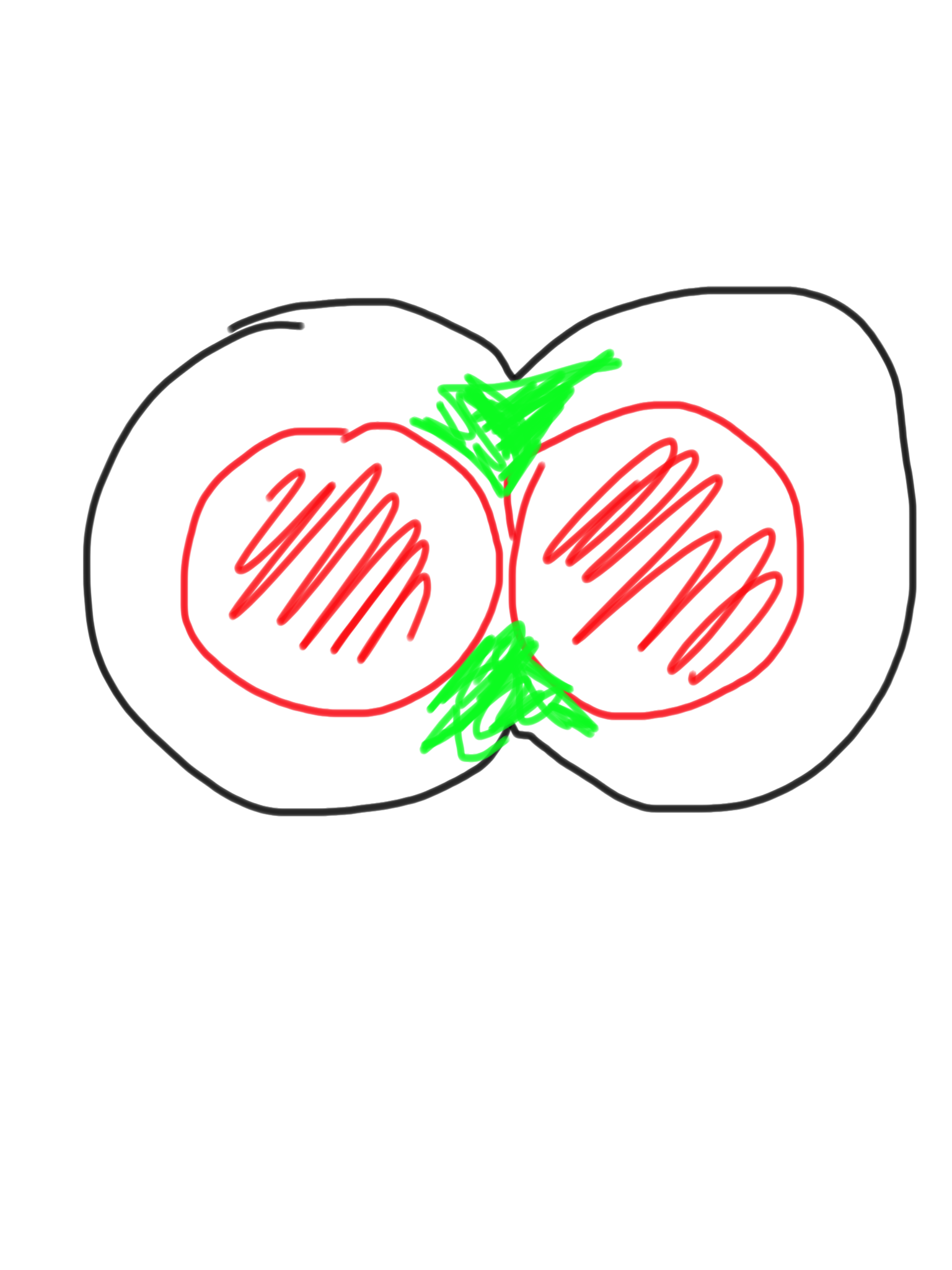
Here 1. expresses common insight, while 2. is new insight brought by RealQM, which can be illustrated as follows:
Small radius of inner shells (red): Binding (green)


Large radius of inner shells (red): Small binding (green).


Recall that StandardQM offers an explanation based on an idea that a Gold atom has inner electrons reaching half the speed of light with increased mass binding the valence electron. It is a mind-boggling explanation. More precisely, the value of relativity theory is that it can explain any observation outside mainstream science as a relativistic effect.  That the relativistic effect is very strong for Au(79) but very weak for Cs (55) is hard to accept, since they can differ by at most a factor $(55/79)^2\approx 0.5$. 

Here is an illuminating chat with GPT. In particular the seemingly contradictory fact that Francium Fr (87) has stronger relativistic effect and stronger reactivity is discussed.

Here are the basic (3) lines of the RealQM code: update of electrons, potential and free boundary:

//Update of shell-electron wave functions
for (var q=1;q<Q+1;q++){
  for (var i=M[q-1]+1;i<M[q]-1;i++){
  u[i]=u[i]+0.5*dt*(u[i+1]-2*u[i]+u[i-1])/pow(h,2)+0.5*dt*(u[i+1]-u[i-1])/(h*i*h) + dt*K[i]*u[i] -       dt*2*P[i]*u[i];
 if (q<Q}
  u[M[q]]=u[M[q]+1];
  u[M[q]-1]=u[M[q]-2];
}
}

//Normalisation of shell-electron charge
  normu[q]=0;
  for (var i=M[q-1];i<M[q];i++){ 
  normu[q]= normu[q] + pow(u[i]*(i*h),2)*h;
  }
  for (var i=M[q-1];i<M[q];i++){ 
  u[i]=sqrt(E[q])*u[i]/sqrt(normu[q]);
}

//Update of shell-electron potentials
for (var q=0;q<Q+1;q++){
  for (var i=M[q]+1;i<M[q+1]+1;i++){
  P[i]=0;
  for (var j=1;j<N+1;j++){
  P[i]=P[i]+0.5*pow(u[j],2)*pow(j*h,2)*h*min(1/(i*h),1/(j*h));
  if (j>M[q] && j<M[q+1]){
  P[i]=P[i]-0.25*pow(u[j],2)*pow(j*h,2)*h*min(1/(i*h),1/(j*h));
  }
  }
  }
}
//Update of free boundary
for (var q=1;q<Q;q++){
  if (u[M[q]]>u[M[q]-1]+diff){  
  M[q]=M[q]-2;
  }
  if (u[M[q]]<u[M[q]-1]-diff){
  M[q]=M[q]+1;
  }
}