Visar inlägg med etikett free will. Visa alla inlägg

lördag 4 maj 2019

Free Will and Quantum Mechanics

Sabine Hossenfelder on BackReaction believes that quantum mechanics says that humans do not have a free will:
  • Physics deals with the most fundamental laws of nature, those from which everything else derives. These laws are, to our best current knowledge, differential equations. Given those equations and the configuration of a system at one particular time, you can calculate what happens at all other times. 
  • That is for what the universe without quantum mechanics is concerned. Add quantum mechanics, and you introduce a random element into some events. Importantly, this randomness in quantum mechanics is irreducible. It is not due to lack of information. In quantum mechanics, some things that happen are just not determined, and nothing you or I or anyone can do will determine them.
  • Taken together, this means that the part of your future which is not already determined is due to random chance. It therefore makes no sense to say that humans have free will.
This is an expression of the monumental confusion of modern physicists caused by the idea that atoms play games of roulette attributed to quantum mechanics as being based on Schrödinger's multidimensional wave equation, something which Einstein and Schrödinger never accepted.

I have followed a different line of thought viewing physics as forms of analog computation with finite precision, which can be simulated by digital computation with finite precision presented at The World as Computation including a new approach to quantum mechanics as Real Quantum Mechanics without games of roulette

In this world there is room for humans with free will, although you cannot control everything in your life, due to lack of precision. If you are not an addicted gambler this may be the world for you.

Determined or Random??

PS The idea that atoms play games of roulette has corrupted modern physics into incomprehensible voodoo-science. Macroscopics as complex systems of simple microscopics can express random behavior, but random microscopics destroys cause-effect and demands contradictory microscopics of microscopics. Contradictory science is voodoo-science, even if it is text book modern physics. 


fredag 20 maj 2011

Free Will and Finite Precision Computation 5


  • The free will that humans enjoy is similar to that exercised by animals as simple as flies.
  • Animals always have a range of options available to them...perceived as conscious decisions.
  • The idea tackles one of history's great philosophical debates.
  • What has been long established is that "deterministic behaviour" - the idea that an animal poked in just such a way will react with the same response every time - is not a complete description of behaviour.
  • Even the simple animals are not the predictable automatons that they are often portrayed to be.
  • However, the absence of determinism does not suggest completely random behaviour either.
  • Experiments has shown that although animal behaviour can be unpredictable, responses do seem to come from a fixed list of options.
  • Free will is not that lofty metaphysical thing that it was until the 1970s or so.
  • It is a biological property, a trait; the brain possesses the freedom to generate behaviours and options on its own.
  • The exact mechanism by which brains - from those of flies up to humans - do that generation remains a matter for experiments to more fully prove.
  • There is no way the conscious mind, the refuge of the soul, could influence the brain without leaving tell-tale signs; physics does not permit such ghostly interactions.
  • Brembs and others have used mathematical models to simulate brain activity on a computer, finding that what worked best was a combination of deterministic behaviour and what is known as stochastic behaviour - which may look random but actually, in time, follows a defined set of probabilities.
  • Tethered fruit flies proved their choices to be neither deterministic nor random.
  • The strong, Cartesian version of free will—the belief that if you were placed in exactly the same circumstances again, you could have acted otherwise—is difficult to reconcile with natural laws.
  • There is no way the conscious mind, the refuge of the soul, could influence the brain without leaving tell-tale signs. Physics does not permit such ghostly interactions.
In short, free will seems to be expressed through a combination of goal-oriented determinism (as concerns big things) and indeterminism (as concerns little things), with a clear connection to finite precision computation.

It seems that the discussion has passed from sterile metaphysics into a more constructive analysis of finite precision computing minds...

torsdag 19 maj 2011

Free Will and Finite Precision Computation 4


Daniel Dennet advocates a compatibilism of determinism and free will, expressed as a capacity of human beings developed by evolution to avoid (unpleasant) things by voluntary action:

Seeing a brick being thrown at us by some unfriendly agent, we typically choose to duck. Dennet argues that we do that by free will, since it would also be possible to choose to not duck and take the hit to get a case to bring to court.

Dennet argues that either the future is fully determined by the past (Laplace demon) or the future is fully undetermined in the quantum sense that the next position of an electron is not determined but subject to throwing a dice.

In either case we cannot really influence what is going to happen, and thus we cannot exercise any free will: whatever happens, happens. Yet Dennet claims that we have a free will in the sense that we can decide to avoid certain things, but not all: We will not have time to duck if the brick is replaced by a bullet.

I get the impression that Dennet's resolution of the apparent contradiction between a free will and full determinism/indeterminism, is a scholastic resolution in the sense that something essential is being missed and nothing really new is brought in to solve the eternal free will problem.

Would finite precision computation be helpful? The idea here is that little things may be left to be decided by the dice while major things are predetermind by a finite precision Laplacian demon. More precisely, we know that
  • there are major things that we cannot do even if we would like to (limited free will): e g fly like a bird.
  • there are major things we can do which we have decided to do (according to a predetermined master plan): e g go to college.
  • there are little things which we can decide by free will, which we could leave to the dice if we cannot decide: e g meat or fish for dinner.
This opens to a finite precision resolution of the free will problem:
  • big things determined by a finite precision Laplace demon/master plan of ours
  • little things decided by a dice.
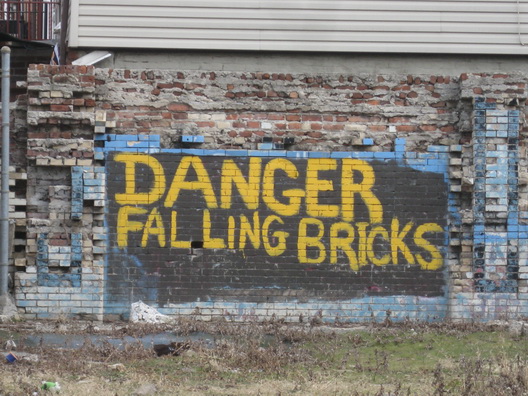
In extreme cases a small thing could become big and would then be described as a strike of luck or accident: to win on the lottery or get hit by a falling brick.

tisdag 17 maj 2011

Free Will and Finite Precision Computation 3

This is a continuation of Free Will 2:

So can we make it rain tomorrow by leaving the car window open? Can the flap of a butterfly in Brazil set up a tornado in Texas?

How can we tell? Well we have already answered this question: Take away the butterfly and observe tornados anyway, close the window and observe rain anyway. Or let the butterfly flap and observe no tornados, open the window and observe no rain.

Evidently we are talking about a big effect (tornado, rain) from a small cause (butterfly, car window), which is only possible if the system under consideration is unstable. Why? Because the definition of an unstable system is that a small cause can have a big effect.

If the effect of any small causes is small, then the system is stable. Most of the systems we can observe are (more or less) stable, because unstable systems tend to break down or explode into non-existence.

Is the weather unstable? Well, we say that the weather is unstable when changes are unpredictable, and we know that this is often the case. How unstable can then the weather be?
Can it be so unstable that the flap of butterfly can cause a tornado? Probably not.

We expect that sufficiently small perturbations cannot change the major features of the weather and cause a tornado. This means that it is irrelevant whether a butterfly flaps or not, or if we leave the car windows open or not, as concerns tornados and rain.

If we accept that small causes do not change major features, that is, that we are dealing with a (more or less) stable system as a typical system which we may be confronted with, then we could say that we could leave certain little things to be determined by chance, by throwing a dice:
  • It would not change anything essential.
  • It would save us time for essentials by avoiding getting drowned into pedantry.
  • In fact, it would be necessary to not get bogged down by details.
  • In other words, we would have to act with finite precision in order to not get stuck on the spot at a specific point in time.
  • Time is advancing and so we have to advance as well and thus we have to take decisions with finite precision only, because we have no time to do everything with infinite precision.
We are now approaching the question of free will. Can we do anything we could of think of doing? No, our abilities are limited, but within these limits we would say that we have some form of free will.

We could decide what to study at the university, with whom to engage, how to dress, what to eat, what to say, but all these decisions could fit into some form of master plan for our life, which we probably should search for if we don't have any. Our free will would not be entirely free but subordinate to a master plan, which we may have chosen by free will or inherited from our parents, spouse or friends or society. So maybe our free will as concerns big things is not that free, as if the main pattern of our life largely is predetermined.

We could still argue that we have a free will to decide little things, what movie to see, what to have for dinner et cet, but we could also say that we will only spend limited time on these issues to find the "optimal solution". We could even use a dice to decide if we cannot easily make up our mind or come to some agreement with somebody.

But you would not like Luke Rhinehart decide big things, such as getting divorced or not, by throwing the dice, because that would quickly ruin your life.

In short, you would act with finite precision and feel that you have some form of free will in particular for little things, possibly exercised using dice, while you may feel that the main path of your life (or at least other people's lives) is more or less predetermined.

This corresponds to something between full determinism (no dice) and full indeterminism (all dice) as a for of finite precision determinism (dice only for little things). In other words, a free will which is not completely free, but not completely unfree either:
  • a finite precision free will.
PS Suppose Tom wants to show Harry that he has a free will. Consider the following conversation:

Tom: Look, I can decide to lift my left arm or my right arm according to my own free will.

Harry: How you decide to lift the left or the right? Do have some predetermined preference?

Tom: Of course not, then it would not be free will.

Harry: OK, but if you are completely neutral, how are going to decide?

Tom: Let me think...should I lift the right arm...or should I lift the left...what could be a good reason to lift the right arm...instead of the left...well, I cannot really decide...I need more time...
but even so I don't how to choose while staying fully neutral...

Harry: Can I offer some help? What about flipping a coin?

Tom: Flipping a coin? Yes, that must be the only possibility which is completely neutral, without any perdetermined predjudice for right and left. That's what I will do to not get held up by this silly test...

måndag 16 maj 2011

Free Will and Finite Precision Computation 2

Continuation of Free Will 1:

David Foster Wallace studies the logical argument of the fatalism of Richard Taylor going back to Aristotle stating that we cannot do anything other than what we actually do, in other words that the future is predetermined and free will is only an illusion.

The logic is that a statement of the form "Tomorrow it will rain" is either true or false: If it is true then it will have to rain, and if it is not true then it cannot rain, in both cases showing that what will happen tomorrow is predetermined.

Of course, this is a simple logical trick based on the idea that a statement must be either true or not true. But nothing says that this must apply to the statement "Tomorrow it will rain". It is a statement without definite truth value when (today) it is uttered; only in retrospect knowing the outcome is it possible to assign it a truth value and then the predetermination disappears.

But there are other arguments showing that the future is determined by the present. The best one is that of Laplace's demon:
  • We may regard the present state of the universe as the effect of its past and the cause of its future.
  • An intellect which at a certain moment would know all forces that set nature in motion, and all positions of all items of which nature is composed, if this intellect were also vast enough to submit these data to analysis, it would embrace in a single formula the movements of the greatest bodies of the universe and those of the tiniest atom;
  • for such an intellect nothing would be uncertain and the future just like the past would be present before its eyes.
Laplace's demon would thus be able to tell today if it is going to rain tomorrow by simply computing the solution to the equations of motion describing the evolution of particles (atoms, molecules) making up the climate system, and would thus be able to make a necessarily true prediction of a coming event, thus showing that it is predetermined.

But is there a Laplace demon? Human computing power is capable of solving the equations of motion for particle systems of millions or billions of particles (10^6 - 10^9), but not the octillions (10^30) of real systems.

We are all too familiar with the fact that human intellect cannot tell for sure if it is going to rain tomorrow. But is the weather still predetermined?

Is there anything we can do by free will to make it rain or not? Can we make it rain tomorrow by leaving our car windows open? The investigation continues...

söndag 15 maj 2011

Free Will and Finite Precision Computation 1


In recent books I have shown that the concept of finite precision computation, in reality in analog form and in simulation of reality in digital form, can be used to give rational deterministic (mathematical) explanations of the following phenomena:
  • direction of time
  • 2nd law of thermodynamics
  • blackbody radiation,
which have evaded explanations using both classical deterministic exact mathematics and classical statistical physics. Finite precision computation opens classical exact determinism to some imprecision or indeterminism, without going all the way to the full indeterminism of statistical physics, and thus avoids the impossibility of both extreme determinsim and extreme indeterminsim.

In finite precision computation, little things may be decided by throwing a dice, corresponding to chopping a decimal expansion into a finite number of digits, while big things still may be fully deterministic.

The concept can be described as one of the following options for using dice throw to decide what to do:
  • Full Determinism: Calculate everything exactly. Never throw a dice.
  • Full Indeterminsim: Calculate nothing. Always throw a dice.
  • Finite Precision: Calculate the big. Throw a dice to decide the small.
Full Indeterminism is represented by the cult novel The Dice Man by George Cockcroft about the psychiatrist Luke Rhinehart, who decides to let the dice decide everything with catastrophical results from using it to decide big things like getting divorced or not.

Full Determinsim is represented by the fatalism of Richard Taylor exhibited by the cult author David Foster Wallace, who took his own life on Sept 12 2008, maybe after asking the dice to decide to pull the trigger or not.

Wallace wrote a college thesis on Taylor's fatalism with title Fate, Time, and Language: An Essay of Free Will, republished in 2010 by Columbia State University.

Can Finite Precision Computation be used to shed some light on the eternal philosophical problem Free Will? I will address this question in a sequence of posts, while reading a bit of Wallace. I will start with the following question:
  • Is it helpful to let a dice decide little things?